
9 Reasons to Use a GPS Tracker in Qatar
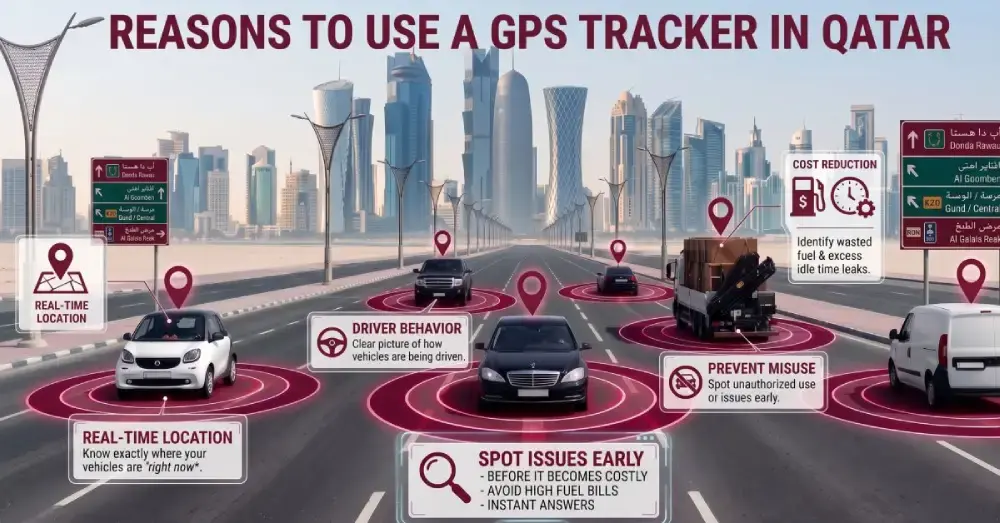
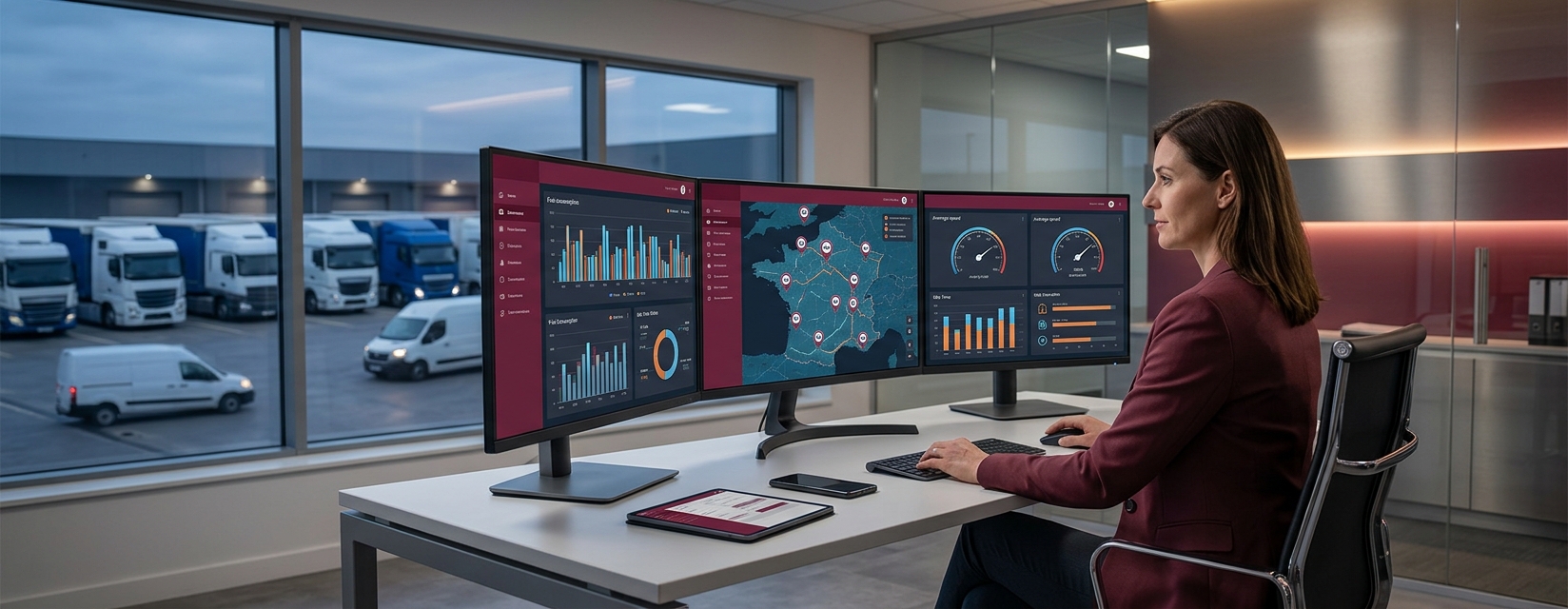
Where are your vehicles right now, and what is that costing you? A GPS tracker in Qatar answers both questions instantly. One of the reasons to use a GPS tracker is to get a clear picture of where your vehicles are, how they’re being driven, and where money is quietly slipping away through fuel, idle time, or misuse.
Most vehicle owners only notice these problems after something goes wrong, such as a higher fuel bill or a vehicle going somewhere it should not. A GPS tracker helps you spot these issues early, before it becomes costly.
Offer
Special Qatar Offer – Get Premium GPS Tracking with Free Installation!
1. Real-Time Vehicle Location
This is the most basic thing a tracker does, and it’s also the one people use the most. You open an app, and you know exactly where a vehicle is.
A manager can find a broken-down vehicle without asking around. A driver already close to a new job can be sent there instead of one sitting across town.
- Answer delivery questions without calling the driver
- Locate a vehicle quickly during a breakdown or emergency
- Confirm a driver actually reached a client site
- Send the nearest available vehicle to a new job
2. Better Vehicle Security
Theft and unauthorised use are real worries, particularly if vehicles sit parked overnight in different areas or get handed to staff for the day. GPS vehicle tracking won’t stop someone from trying, but it puts you in a position to react fast instead of finding out days later.
Rental companies deal with this constantly. A car that leaves its expected area, or doesn’t come back when it should, gets flagged instead of just reported missing with no leads to go on.
- Vehicles used outside agreed hours without you knowing
- Rented vehicles wandering outside their expected area
- Slow theft reports because there’s no location data to work with
- Arguments about where a vehicle actually was on a given day
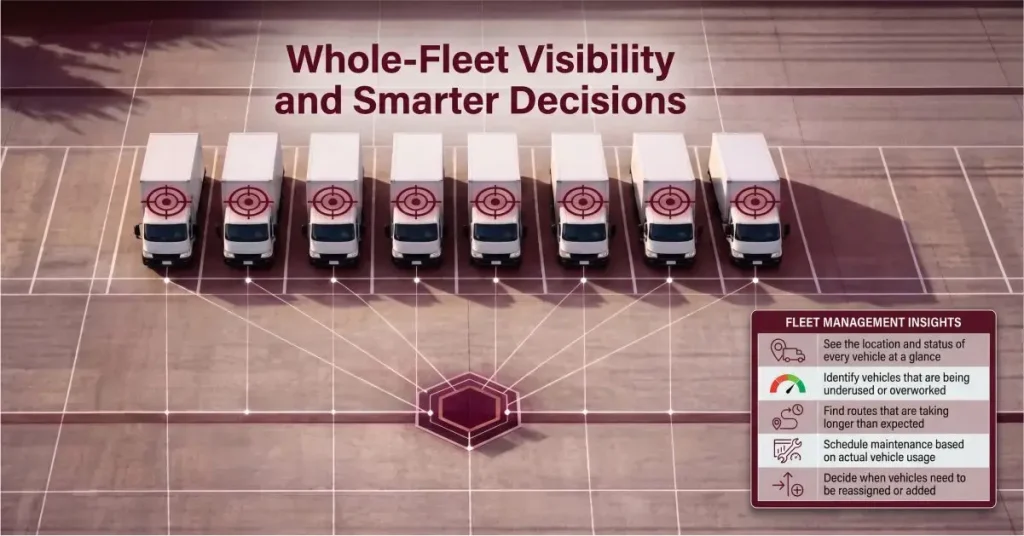
3. Whole-Fleet Visibility and Smarter Decisions
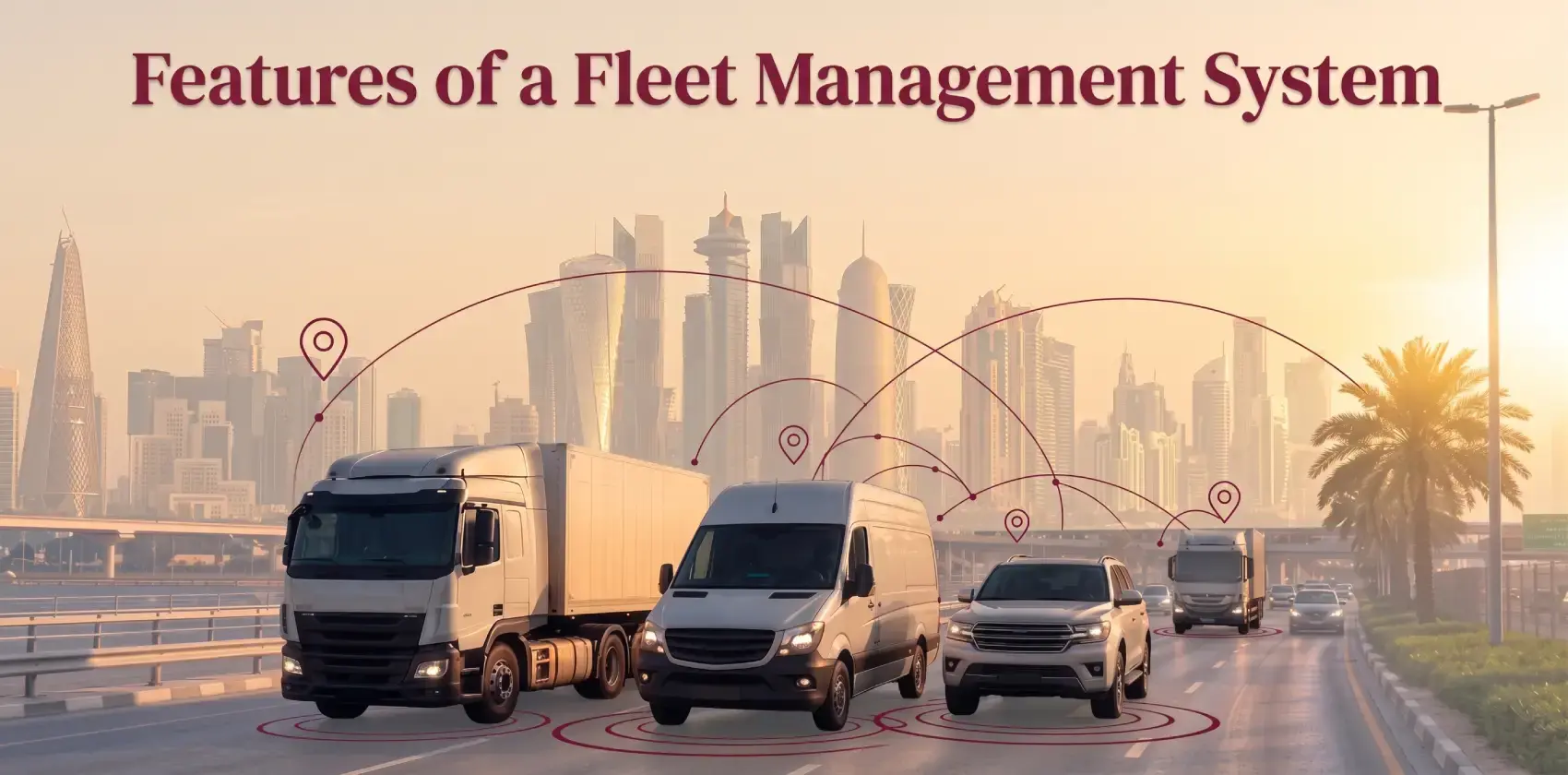
Once you can see your entire fleet in one place, it becomes easier to manage vehicles and make better decisions. For example, a construction company with trucks working across several sites can quickly check which vehicles are where without calling drivers or supervisors.
- See the location and status of every vehicle at a glance
- Identify vehicles that are being underused or overworked
- Find routes that are taking longer than expected
- Schedule maintenance based on actual vehicle usage
- Decide when vehicles need to be reassigned or added
With this information, a fleet tracking system helps you manage your vehicles more efficiently instead of relying on calls, assumptions, or guesswork.han
4. Driver Behaviour Monitoring
Where a vehicle goes matters. How it gets driven matters just as much. Harsh braking, speeding, sudden acceleration, all of it adds up in fuel costs, accident risk, and wear on the vehicle itself.
Think of a staff transportation company running shuttle buses. Passengers expect a smooth, safe ride, and the company is on the hook if something goes wrong. Monitoring driving patterns means catching a problem driver before an incident forces the issue, not after.
- Harsh braking and sudden acceleration
- Speeding on particular routes
- Excessive idling
- Habits worth coaching before they turn into something worse
5. Reduced Unnecessary Fuel Usage
Fuel is one of the biggest ongoing costs for any fleet, and a lot of the waste happens quietly. A food delivery business is a good example. Inefficient routes between stops, engines idling outside restaurants while waiting on an order, the odd personal errand mid-shift. None of it looks dramatic on its own, but it adds up fast at the end of the month.
No more:
- Unnecessarily long routes increasing fuel costs
- Engines left idling for no reason
- Unauthorised personal trips during work hours
- Repeated detours that add cost without adding value
6. Trip and Route History
A recorded history of where a vehicle has been is more useful than people expect until they actually need it. It settles disputes, confirms work was done, and shows patterns that are easy to miss day to day.
A service company sending technicians to client sites can pull up trip history to confirm a visit happened at the time it was reported, rather than taking someone’s word for it. That alone can save an awkward conversation with a customer.
- Confirm a service visit actually took place
- Review how a day’s route was actually planned
- Check mileage or trip details when something doesn’t add up
7. Instant Alerts
Nobody has time to watch a tracking screen all day, which is why alerts matter more than the live map itself. You set the conditions, and the system tells you when one is triggered.
- A vehicle leaving a set area
- Speed going over a limit you’ve set
- Use outside working hours
- An unusual stop in the middle of a scheduled route
A staff transportation company, for instance, might set an alert for buses running late, so the team hears about a delay before passengers start complaining.
8. Improved Delivery and Transportation Operations
For delivery and logistics businesses, tracking isn’t a nice extra, it shapes how the day actually runs. Dispatchers assign the closest driver instead of guessing. Customer service gives a real delivery window instead of a vague one.
A courier company handling same-day deliveries across Qatar feels the difference most during busy periods, when every slot matters and there’s no room for guesswork.
- Assign the nearest driver to a new order
- Give accurate delivery windows instead of estimates
- Keep track of vehicles even when things get busy
9. Mobile Access to Vehicle Information
Fleet managers aren’t always at a desk. An app means the information is there whenever it’s needed, not only when someone’s in front of a computer.
A small business running a handful of service vehicles might not have a dedicated operations person at all. Checking things from a phone means staying on top of the fleet without needing to be in an office all day.
- Check vehicles from a client meeting or while travelling
- Stay informed without a dedicated operations team
- Get the full picture from a phone in seconds
GPS Tracking and Transport Requirements in Qatar
Some commercial vehicles and transport operations in Qatar may fall under specific regulatory or licensing requirements. What applies can depend on the type of vehicle, the nature of the business, and the sector involved, such as public transport, freight, or other specialised commercial activity.
The general benefits of GPS tracking covered here apply to any vehicle owner. Specific legal obligations are a separate matter, and they depend on the vehicle and activity in question, so it’s worth confirming directly with the relevant Qatari authorities rather than assuming.
Why Consider Najoom Al Thuraya Qatar
If you’re looking into GPS tracking options in Qatar, Najoom Al Thuraya builds its offering around the practical needs covered above:
- Real-time GPS tracking to see vehicle locations as they happen
- Mobile app and web-based access, so you’re not tied to one device
- Instant alerts for the events that matter to you
- Geofencing to define areas and get notified on entry or exit
- Trip history with a record of past journeys
- Driver behaviour monitoring to see how vehicles are actually driven
- Fleet management tools that bring it all together
- Reporting features to review patterns over time
- Customer support to help you get set up and actually use it
Whether it’s a single car or a full commercial fleet, the point is the same: practical, usable insight into your vehicles rather than a dashboard full of numbers nobody looks at.
Final Thoughts
A GPS tracker replaces guesswork with real information, whether that’s catching a security issue early, cutting fuel waste, understanding driver habits, or just making better calls day to day. For vehicle owners, small businesses, and fleet managers across Qatar, the value tends to become obvious pretty quickly once it’s actually in use.
If you’re thinking about a GPS tracker in Qatar for your vehicle or fleet, it’s worth reaching out to Najoom Al Thuraya to talk through what would actually fit your operation.
FAQ's
GPS tracking can be used for company and rental vehicles, but specific requirements may vary depending on the vehicle, business activity, and applicable regulations. If you operate in a regulated sector such as public transport or freight, it's worth checking directly with the relevant authority.
If security, fuel costs, or simply knowing where your vehicle is matters to you, yes. GPS tracking isn't only useful for large fleets. It can be just as valuable for a small business or an individual vehicle owner.
It helps you find where fuel is being wasted, whether that's idling, longer routes, or unauthorised trips. The tracker itself doesn't cut fuel costs. The visibility it gives you is what lets you make the changes that do.
That comes down to how a business chooses to implement tracking and how it's communicated to staff. Being upfront with drivers about monitoring tends to work better for trust and cooperation than not saying anything.
Yes. Mobile app access typically comes alongside web-based tracking, so checking vehicle locations and alerts doesn't require being at a desk.
It's a record of where a vehicle has been and when. That's useful for confirming service visits, sorting out customer disputes, and reviewing how efficiently a route was actually run.