
Driver Behaviour Monitoring in Qatar
Running a fleet in Qatar isn’t just about knowing where your vehicles are at any given moment, it’s about knowing how they’re actually being driven. Najoom Al Thuraya’s driver behaviour monitoring keeps an eye on speeding, harsh braking, sudden acceleration, idling, sharp cornering, and unplanned route changes, all in real time. That kind of visibility gives fleet managers what they need to cut down on accidents, bring fuel costs under control, and get more life out of every vehicle based on real data rather than gut feeling. It’s built with Qatar’s roads in mind, whether that’s dense city traffic or the long stretches between industrial sites.
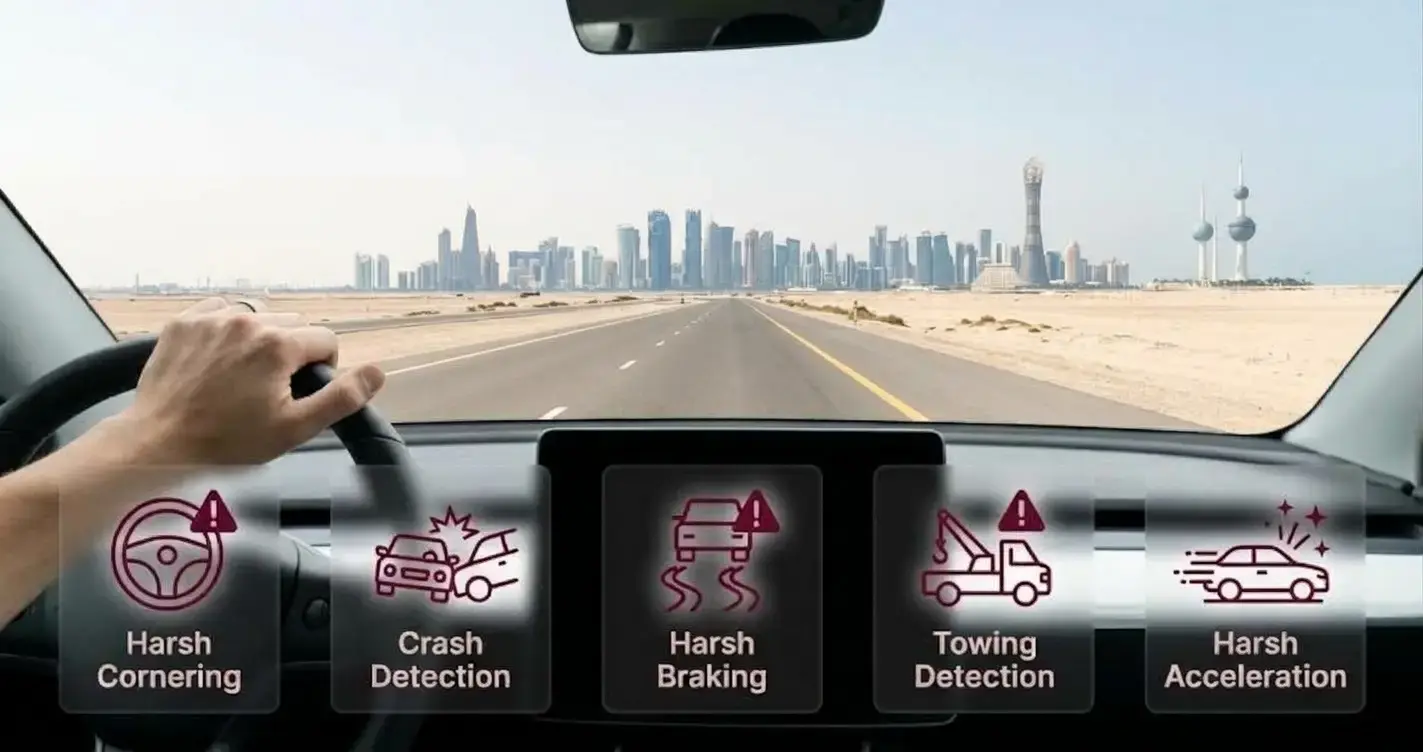
What Driver Behaviour Monitoring Actually Means
Driver behaviour monitoring combines GPS tracking with in-vehicle sensors to capture how a vehicle is being driven, not just its location. Instead of leaning on drivers to self-report or waiting for the occasional spot check, it gives managers a running, unbiased view of driving habits, delivered as straightforward reports and live alerts.
Once it’s in place, fleet managers gain:
A continuous record of driving events, not just occasional snapshots
Alerts the moment risky behaviour happens, not weeks later
Reports that make patterns easy to spot across drivers and routes
Data that supports fair, consistent coaching conversations
For fleets working across Doha’s traffic, industrial routes, and highway runs, this level of visibility surfaces patterns that would otherwise stay hidden until something actually goes wrong.
Key Driving Behaviours
Key Driving Behaviours That Get Monitored
Speeding
Speed limits shift depending on where you are, inner Doha roads, the Corniche, and the faster highways linking industrial zones all have different thresholds. A monitoring system picks up on when a vehicle goes over the posted limit or a company-set cap, and logs:
- Where the event happened
- How fast the vehicle was travelling
- How long the speeding lasted
That gives managers a chance to bring it up with a driver before it turns into a fine or something worse.

Harsh braking
When a driver brakes hard and suddenly, it’s usually a sign they were following too closely or reacted late to what was happening ahead. If it keeps happening, it’s often worth coaching on following distance and reading the road further ahead, particularly on routes like Salwa Road during rush hour.
Rapid acceleration
Flooring the accelerator puts unnecessary strain on the engine and transmission, and it burns through more fuel than it needs to. Keeping track of this makes it easier to spot drivers who’d benefit from a calmer driving style which, as a bonus, is usually smoother and safer too.
Idling
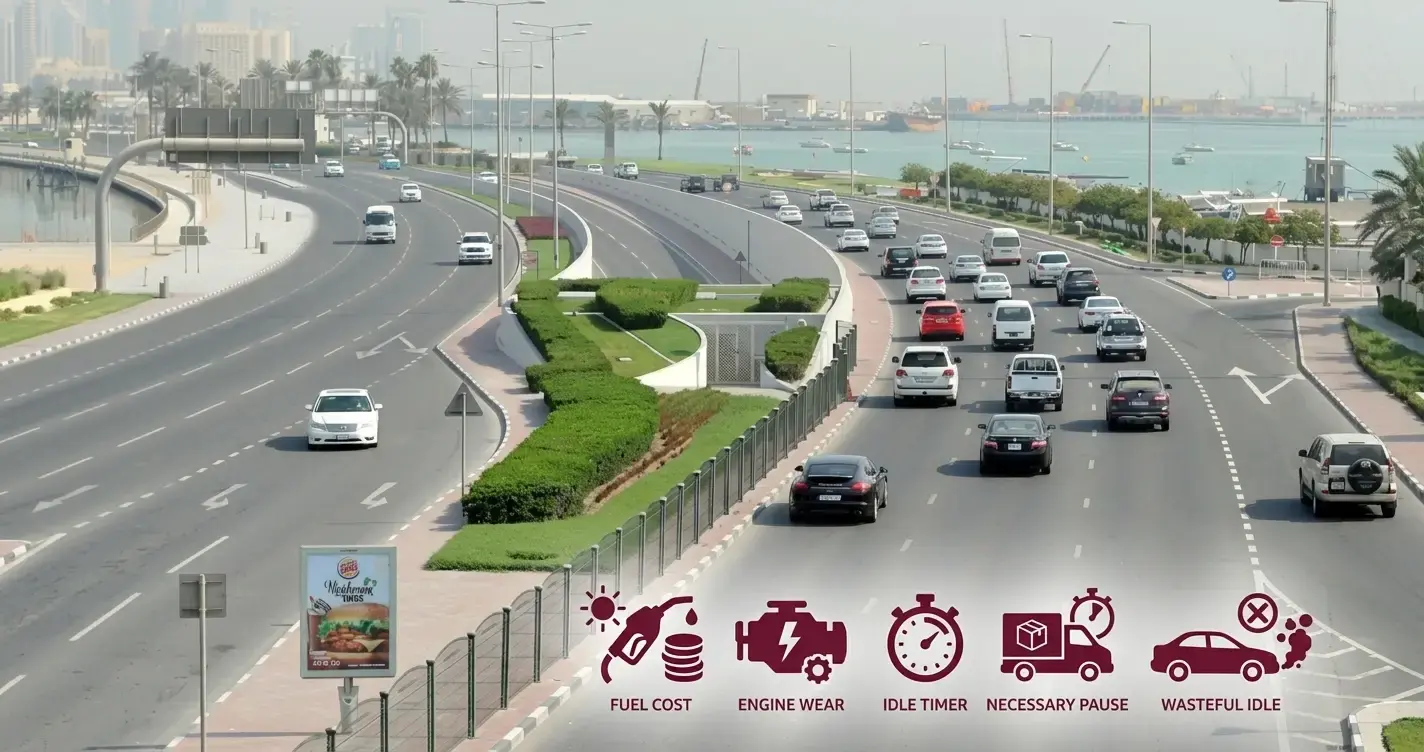
Given Qatar’s heat, idling isn’t always avoidable. Drivers often need the AC running while they wait at a site or during loading and unloading. But left unchecked, idling quietly eats into fuel budgets and adds engine wear over time. Tracking idle duration helps separate:
- Necessary pauses, like waiting during a delivery or loading operation
- Wasteful habits, like leaving a vehicle running long after there’s any real need
That way, fleets can set sensible policies without being unreasonable about the climate.
Sharp cornering
Taking a corner too fast affects how stable a vehicle is and wears down tyres and suspension faster than it should. It also raises the risk of a rollover especially in taller vehicles like vans and trucks. Watching cornering behaviour helps flag drivers who might need a nudge to ease off before turns, particularly around the roundabouts and interchanges common across Doha and Al Rayyan.
Route deviations
When a vehicle goes off its planned route without any obvious reason, it could be something harmless, a detour around roadworks or something worth looking into, like unauthorised personal use. Comparing the planned route against what actually happened lets dispatchers follow up quickly and keep deliveries or service calls on track.
Beyond these six, a lot of fleets in Qatar also keep an eye on long driving hours, since fatigue is a genuine concern on the quieter highways leading out to industrial areas. Knowing how long someone’s been behind the wheel without a break helps managers plan rest stops and rotations properly, rather than leaving it to chance.
Real-Time Alerts, Not Just End-of-Month Reports
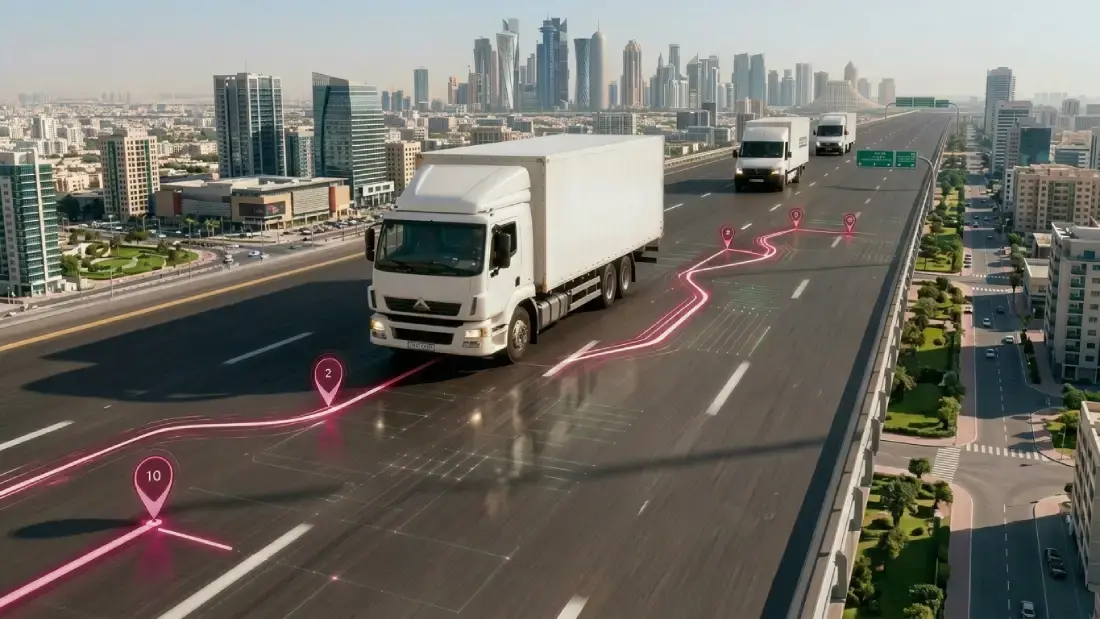
Waiting for a monthly report to flag an issue isn’t always good enough, especially when something needs attention right away. Real-time alerts let managers know the moment something notable happens, such as:
A vehicle exceeding a speed threshold
Movement outside an assigned area
Idling longer than expected
A vehicle drifting off its planned route
That means problems can be dealt with the same day, instead of surfacing weeks later after the same issue has already repeated itself several times over.
On top of these alerts, ongoing performance reports bring everything together over longer stretches of time, distance covered, average speed, how many speeding or harsh braking events occurred, idling time, and working hours. Rather than looking at trips one by one, a manager can step back and view a driver’s overall pattern across weeks or months, which makes genuine trends far easier to spot than isolated incidents.
Qatari Fleets
Why Qatari Fleets Are Adopting This Technology
Strengthening Overall Fleet Management
When speeding, braking, idling, and route data all live in one place, alongside historical trip records showing where a vehicle went, how long it stopped, and how long the trip took, fleet management becomes much more efficient and data-driven. This supports better decisions around scheduling, route planning, driver assignments, and vehicle allocation.
- Scheduling and dispatch planning
- Route planning and adjustments
- Driver assignments
- Vehicle allocation across the fleet
Reducing Fuel Costs
How a vehicle is driven has a direct effect on fuel efficiency. A few habits make the biggest dent:
- Harsh acceleration burns more fuel than a gradual start
- Excessive idling wastes fuel while the vehicle goes nowhere
- Inconsistent speeds are less efficient than steady, controlled driving
By pinpointing which drivers or routes are less efficient, fleet managers can fix the actual behaviour instead of just watching fuel costs rise without knowing why.
Supporting Fair Driver Performance Reviews
Behaviour data gives managers a consistent, objective basis for performance discussions. Instead of relying on complaints or one-off incidents, managers can look at patterns over weeks or months, recognise the drivers who consistently do well, and offer targeted coaching to those who need it.
Improving Road Safety
Road safety matters a great deal in Qatar, and fleet operators carry real responsibility for the people and vehicles they put on the road. Driver behaviour monitoring gives companies the insight to catch risky habits before they turn into collisions, helping build a safer driving culture across the whole team, not just among a handful of problem drivers.
Extending Vehicle Life
Aggressive driving wears down brakes, tyres, suspension, and engines faster than they should wear. For fleets covering long distances servicing sites in the Industrial Area or making regular coastal runs, cutting down on this wear means fewer surprise repairs and longer gaps between major maintenance jobs.

10+
Years of Experience
How This Applies to Qatar's Fleet Sectors
Different industries across Qatar lean on driver behaviour monitoring for different reasons:
Logistics and delivery companies use it to keep delivery schedules realistic while trimming fuel spend across large numbers of vehicles moving through Doha and the surrounding areas.
Construction and industrial fleets, often shuttling between project sites and depots in places like Al Wakrah or the Industrial Area, rely on it to manage wear on vehicles and reduce the safety risks that come with hauling heavy equipment.
Oil and gas contractors serving sites near Ras Laffan and Mesaieed use it to keep tabs on long-distance driving behaviour, where fatigue and speeding are real risks on the quieter highway stretches.
Passenger transport and school bus operators use behaviour monitoring to reassure parents, schools, and regulators that drivers are meeting the expected safety standards on every single trip.
Rental and leasing companies use it to understand how vehicles are actually being driven by different renters, which helps protect both vehicle condition and resale value.
Getting Started With Driver Behaviour Monitoring
Rolling out this kind of monitoring works best when it’s done gradually and openly. Drivers should know what’s being tracked and why the point is improvement and safety, not surveillance for its own sake. Most fleets follow a fairly similar path:
- Review baseline behaviour data before making any changes
- Set realistic thresholds for events like speeding or harsh braking
- Use regular reports to guide coaching conversations rather than punitive action
- Adjust policies over time as driving habits improve
Najoom Al Thuraya Qatar works directly with fleet operators to set up systems that suit their specific vehicle types, routes, and day-to-day operations whether that’s a small delivery fleet or a large industrial operation.

Frequently Asked Questions
Most systems are set up to monitor only during work-related trips or when a vehicle is assigned to a job. Fleet managers usually put clear policies in place about when monitoring is active, especially for vehicles that see personal use as well.
Many fleets notice a shift in driving habits within the first few weeks, simply because drivers know their behaviour is being recorded. The bigger, longer-term payoffs lower maintenance costs, fewer incidents tend to build up gradually as coaching and policy changes take hold.
It scales down just as well as it scales up. Smaller operators often get particularly good value from it, since a single bad incident or a recurring pattern of poor driving hits a small fleet's costs and reputation much harder, proportionally, than it would a larger one.
Good monitoring systems account for normal driving adjustments, slower speeds in heavy traffic, cautious braking during a dust storm, that sort of thing. The aim is to catch genuinely risky patterns over time, not flag every reasonable call a driver makes.